How estimates, quotes and bids compare
| Compare | Estimate | Quote | Bid |
|---|---|---|---|
| The price | An expected cost, often expressed as a range | A fixed price for the stated scope | A fixed price for the stated scope, offered in competition |
| Can it change? | May change as the scope becomes clearer, subject to the terms and required approvals | Changes should follow the agreed terms and approval process | Often can’t be withdrawn once it’s submitted or relied on, so check the bid terms first |
| Best for | Repairs or diagnostic work where the full scope is still uncertain | Installations and replacements with a clear scope | Work being offered to several contractors for proposals |
| Who asks for it | Homeowners and many service customers | Customers who need a defined price before approving the work | General contractors, property managers and public agencies |
When to use each
- Use an estimate when the scope is uncertain. For example, you may need to trace a leak before you can price the repair. Explain what the estimate covers, what could change the cost and when you’ll need approval to proceed.
- Use a quote when you can define the work. A standard replacement or scheduled service may be suitable once you’ve confirmed the site conditions and requirements. Include enough allowance for the labor and materials needed to complete that scope.
- Submit a bid when the customer has a bidding process. Review the drawings, scope, submission requirements and deadline. State your assumptions and exclusions clearly, and confirm that your response covers what was requested.
Which document do you need?
Answer the question to see which one fits.
What the document should include
- A description of the work that the customer can understand and review.
- Any exclusions, such as permits, wall repairs or disposal, if those aren’t part of your scope.
- The price or estimated range, including how taxes and additional charges are handled.
- The process for approving and pricing changes before additional work begins.
- An expiry date or validity period for the price.
- Payment terms, including any deposit and payment milestones.
- A way to record the customer’s acceptance of the scope, price and terms.
Riverbend Services
Quote Q-1042: Water heater replacement
Prepared for Jordan Ellis · November 20, 2026
Scope of work
Remove and haul away the existing 50-gallon gas water heater, and install a comparable 50-gallon gas model in the same location. Pull the required permit, connect the new heater to the existing water, gas and vent lines, then test for leaks and safe operation.
Not included
The permit fee, billed at cost. Gas line or venting upgrades required by code, and drywall repair.
Price
$1,825.00 including materials. Sales tax isn’t included; where it applies, it’s added at the local rate.
Changes
If we find work outside this scope, we’ll explain the cost and get your approval in writing before continuing.
Valid until
This price is good for 30 days from the date above.
Payment
A 10% deposit to schedule the work. The balance is due when the work is complete.
Acceptance
Sign below to accept the scope, price and terms in this quote.
Can a customer hold you to the price?
Treat the wording and acceptance process carefully. Calling a document an estimate doesn’t, by itself, explain whether you can increase the price. Be clear about the scope, any uncertainty and the approval needed before you proceed with changes.
Legal requirements depend on the location, trade and agreement. Have a qualified local lawyer review the terms you use, particularly for price changes, deposits and customer acceptance. This guide explains the practical differences between the documents; it isn’t legal advice.
Give customers clear options
When there are several reasonable ways to complete the work, explain the options and price each one. For example, a customer may be choosing between repairing existing equipment, replacing it with a standard model or selecting a higher-efficiency model. Make the differences clear so they can choose based on their needs and budget.
Where Stride fits
In Stride, these documents are managed as estimates. You define the scope and terms, and can include good, better and best options for the customer to review. Once an estimate is accepted, you can create a job from it with the customer, address and scope already filled in.
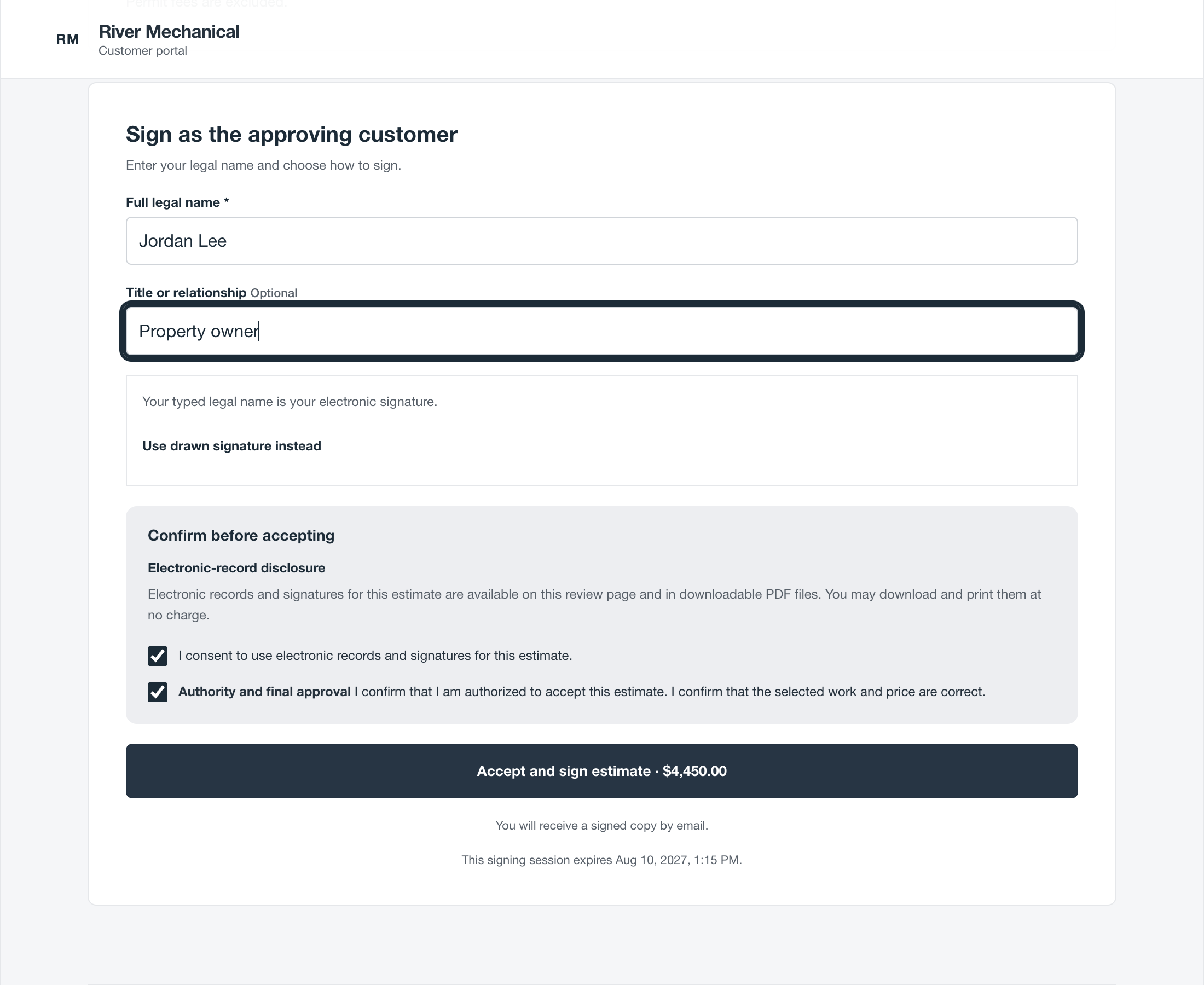
Customers can select an option and sign on their phones without creating an account. Online signing is in beta. The estimate signatures guide explains how to enable it.